


Drupal 9.0 what we expect. What will be new advantages for developers
Drupal 9.0 what we expect. What will be new advantages for developers
Currently, the working version of Drupal is 8th, but in the world of programming there is nothing stable, so there are all prerequisites for preparing in advance for version 9.0. You can already download and try out the dev-version of Drupal 9.0 on the official website of drupal.org.
https://www.drupal.org/project/drupal/releases/9.x-dev
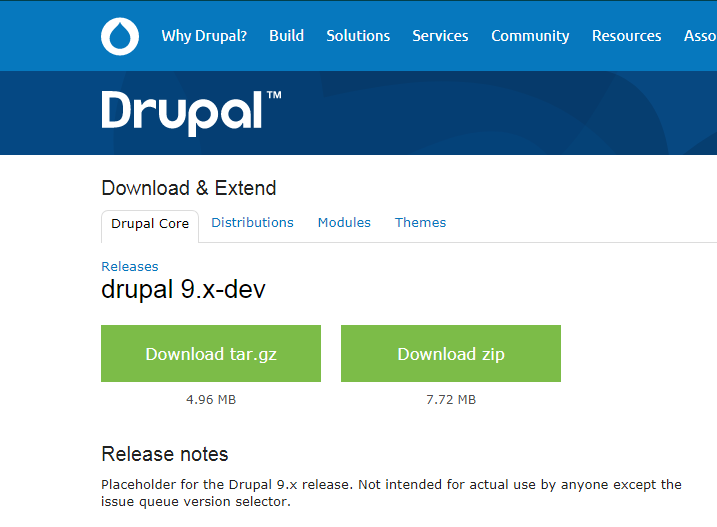
The official release is scheduled for June 2020.
Reasons for the transition
The biggest dependency in Drupal 8.0 is Symfony 3.0, which is expected to end to be supported after November 2021. Due to this, everyone should switch to Drupal 9.0 by November 2021
Another reason for switching to version 9 is relating to third-party dependencies. Now, when Drupal is integrating with such common PHP projects as Twig and Symfony, it needs to follow the lifecycle of vendor support for those projects. The release of Drupal 9 will support software versions that will exist for a long time, such as Twig 2 and Symfony 4/5.
Structure characteristics of Drupal 9.0
In fact, we can say that developers are building Drupal 9 in Drupal 8. Instead of working on Drupal 9 in a separate codebase, they are developing Drupal 9 in Drupal 8. This means that new code-compatible functionality will be added gradually and new experimental features can be created. As soon as the code becomes stable, system developers will delete any old functionality.
Drupal 8.0 is known to work with Symfony 3.0. Drupal 9.0 is scheduled to be used with Symfony 4.0 or 5.0. Ideally, this should be version 5.0, but since Symfony 5.0 is not yet released, Drupal 9.0 developers won't have enough time to try to use them together. So, developers are working now on the ability to use with Drupal 8.0 with Symfony 4.0 and later with Symfony 5.0, as this can further make it easier to use Drupal 9.0 with both versions of Symfony.

New Features in Drupal 9.0
Drupal 9.0 will have the same features as the latest release of Drupal 8 (except for those provided with updated dependencies). Like Drupal 8, Drupal 9.1, 9.2, etc. will add new compatible features for Drupal 9.0 every six months after the official release date of Drupal 9.0. A key advantage of Drupal 9.0 over Drupal 8.0 is that the platform will be supported by security patches after November 2021. It is also envisaged that Drupal 9.0 will be able to provide the simplest update for projects implemented on Drupal 8.0.
Updating of existing systems
It is planned that upgrading existing systems to Drupal 9.0 will be easy. The release of Drupal 9.0 will only depend on the removal of outdated functionality and the upgrading of Drupal dependencies such as Symfony. This will make the release time more predictable and the release quality more reliable.

For module authors, this means they already have new technology, so they can work on Drupal 9.0 compatibility earlier (for example, they can start updating their media modules to use the new library before Drupal 9.0 is released). New modules created for Drupal 8.0 will remain the same in Drupal 9.0, as no major changes will be made to Drupal's structure.
But most importantly, for Drupal site owners, this means that upgrading to Drupal 9.0 will be much easier than upgrading to Drupal 8.0. Drupal 9.0 will simply be the latest version of Drupal 8.0 and its legacy versions will be phased out.
Our Recommendations
- Python is a leader in learning programming languages (Development)August 20, 2019admin1,511
In the end of 1980s, Dutchman Van Rossum created the Phyton programming language. And in February 1991, Guido published the original text, and the language started to freely circulate in the Network. Over the decades, the language has been upgraded and refined, that enabled for programmers to use it today for creating programs and applications, and to implement projects in various directions.
- PHP celebrates its 25th anniversary (Development)August 14, 2019admin1,561
PHP (Personal Home Page Tools) — is a cross-platform, object-oriented programming language that was created in 1995 by Rasmus Lerdorf to generate HTML pages on the web server side.

